The Bottom Line: A commercial change machine turns bills or coins into the coins, tokens, or tickets customers need on the spot, no cashier required. Buyers typically weigh loading style, dispensing type, capacity, and security before settling on a model for their location. Laundromats, car washes, vending rooms, and arcades all lean on these machines to keep unattended locations running without a hitch.
A commercial change machine touches every transaction at an unattended location, so getting the fit wrong shows up fast: a laundromat load that won’t start because a customer can’t get quarters, or a car wash bay stalled out on a busy Saturday with no change in the machine. The CLA, formerly the Coin Laundry Association, estimates roughly 29,500 coin-operated laundromats operate in the U.S. today, a vast majority of them depending on a change machine for every transaction that keeps the location running without an attendant on-site.
Front-Load or Rear-Load: The First Commercial Change Machine Decision
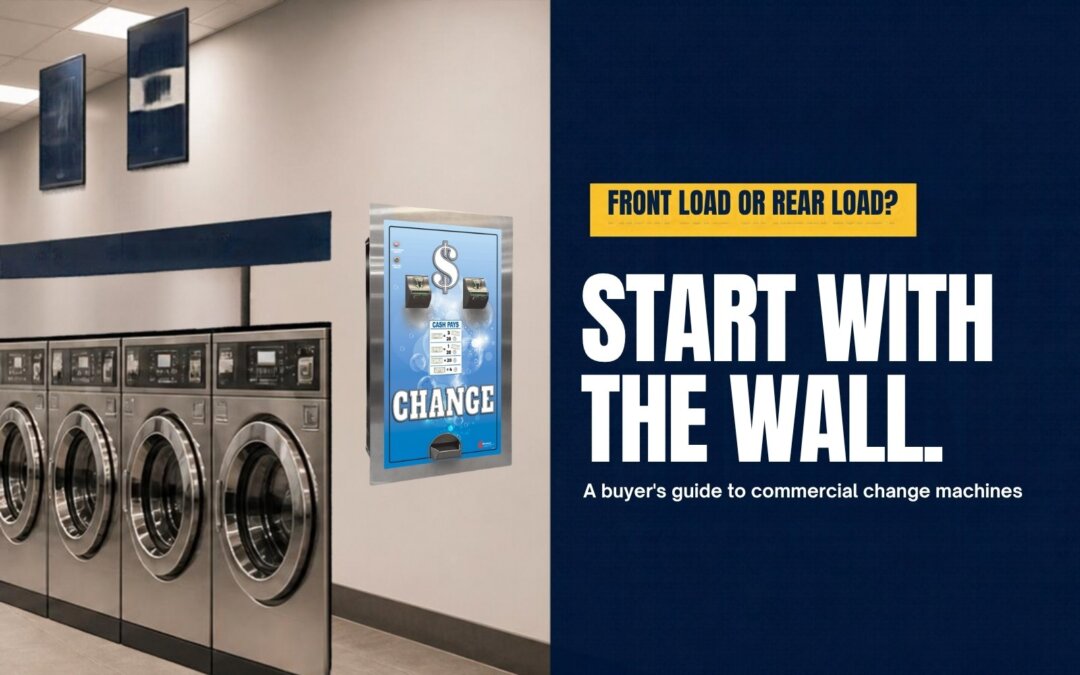
The first question is simple: Do you have a secure back room or wall space to service the machine from? A rear-load unit is serviced from behind, out of customer view, which works well if you have that kind of space. A front-load unit is serviced from the customer-facing side, which fits locations without a dedicated back room.
Match the loading style to your floor plan and available space before you compare change machines side by side.
What Does the Change Machine Need to Dispense?
Quarters, dollar coins, tokens, tickets, bills, or some combination, the right answer depends on what’s on the other end of the transaction. A laundromat needs quarters for load-after-load reliability. An arcade or family entertainment center often runs on tokens instead.
If you’re dispensing a custom token, the diameter, thickness, and value all need to be confirmed before the machine is built, since the internal hopper components are sized around those exact specs. Get this wrong, and you’re stuck retrofitting a machine that was never built for your token in the first place.
Capacity: Matching the Change Machine to Your Collection Routine
Capacity is really a question about your collection routine, not a fixed number. A high-volume car wash and a quiet vending room empty their coin boxes on very different schedules, and the right hopper size should follow how someone realistically collects from the machine, not the other way around.
Think about who handles collections, how far the location is from that person, and how transaction volume swings on your busiest days. A machine sized around your actual routine holds up better than one sized around a guess.
Security Features to Look for in a Change Machine
Is security an issue at your location? Some front-load models were designed for vending rooms and don’t carry the same built-in security a car wash or laundromat location typically needs, so it’s worth asking directly rather than assuming.
Cabinet construction is where security actually lives, not in a marketing claim. Look for heavy-gauge welded steel with solid-welded seams, and check whether the unit carries an ETL listing to UL/CSA standards, which confirms independent testing against a recognized safety and construction standard.
For locations where security is a bigger concern, ask about an upgraded lock plug, such as a Medeco lock, one option manufacturers offer, over the standard Ace lock that ships with the base unit. These are the specifics worth confirming before you buy, not general reassurances.
Optional Features Worth Considering
A base machine covers the transaction. A few optional features address the parts of running an unattended location that have nothing to do with the transaction itself.
- Heater kit: helps a machine installed outdoors keep working through cold weather
- Lock plug upgrade (e.g. Medeco): a more secure lock option for locations where security is a bigger concern
- Audit assistance / counters: built-in counters that track bills in and coins out
- Remote monitoring / notification: alerts you when coin levels drop to a preset amount or a unit goes out of service, without needing to be on-site to notice
Not every location needs all four. Match the list to what your site actually deals with, an outdoor car wash and an indoor vending room have different priorities here.
Why Manufacturer-Direct Service Matters
A change machine is only as good as the support behind it once something breaks. Since 1955, we’ve serviced machines in the field, many for over 25 years, and that kind of track record only happens when the company that built the machine also stands behind it afterward.
Ask whether the company you’re buying from designs and manufactures its own control boards, software, and cabinets, or whether it’s reselling someone else’s hardware. A manufacturer that supports its own products end-to-end, like Standard Change-Makers’ service record, can typically diagnose and resolve issues faster than a middleman waiting on a third party.
Frequently Asked Questions
What’s the difference between a front-load and rear-load change machine?
A rear-load machine is serviced from behind, so cash and mechanical access stay out of the customer-facing area. This works best for locations with a secure back room or wall space. A front-load machine opens from the same side customers use, which fits locations without dedicated back-room access. The right choice depends on your floor plan and available space.
Can a change machine dispense tokens instead of quarters?
Yes, many machines are built to dispense custom tokens instead of or alongside standard coins. The diameter, thickness, and value of the token need to be confirmed before the machine is built, since the internal hopper components are sized around those exact specifications. Getting this detail wrong upfront means retrofitting a machine that wasn’t designed for your token.
What security features should I look for in a change machine?
Heavy-gauge welded steel with solid-welded seams is the baseline to look for in cabinet construction. Check whether the unit carries an ETL listing to UL/CSA standards, confirming independent safety testing, and ask about an upgraded lock plug for locations where security is a bigger concern. If you’re considering a front-load unit, ask the vendor directly what security features it was designed for, not every front-load model is built to the same standard.
Next Steps
Choosing the right change machine for your business comes down to matching loading style, dispensing type, capacity, and security to your location, then weighing the optional features and the service behind the machine against total cost over time, not just the price on the invoice.
We’ve held to that approach for decades, because a change machine that outlasts trends matters more than one that chases them. Browse the full line of change machines and payment solutions, or reach our sales team or call 800-968-6955.