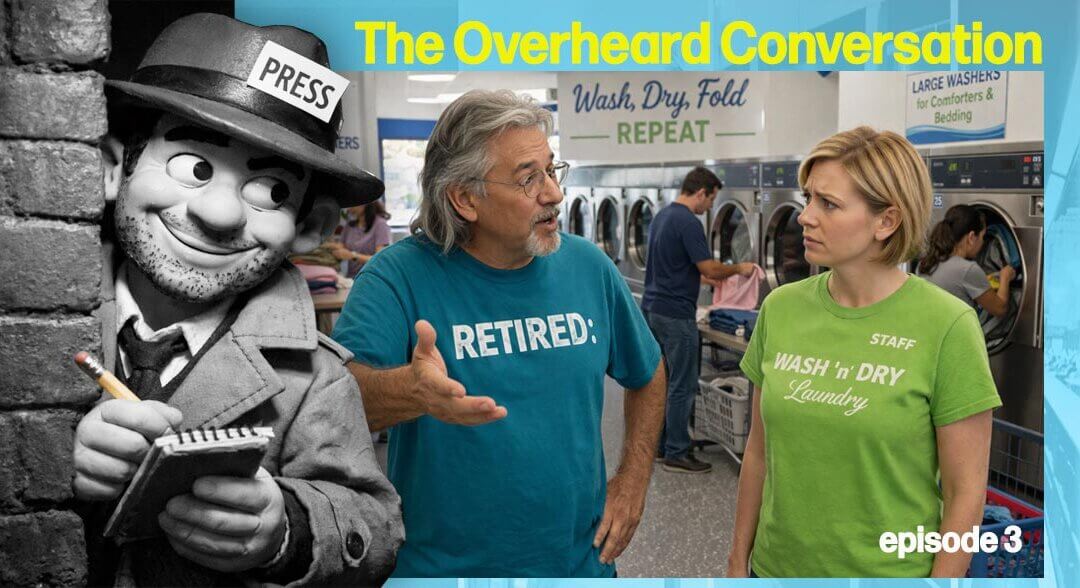
Young Owner: “Everyone’s pushing apps, cards, digital everything. But my store still runs on quarters.”
Experienced Owner: “Funny thing about this business, customers will tell you what they want… if you’re willing to listen.”
I was standing near the change machine when I overheard a conversation between a newer laundromat owner and the person who sold this laundromat a few years ago.
The younger, new owner sounded frustrated.
“I just don’t get it,” she said. “Everyone’s pushing apps, cards, digital everything. But my store still runs on quarters.”
The older, experienced retired laundry owner didn’t answer right away. He just looked down the row of machines—all running, all occupied.
“Funny thing about this business,” he said. “Customers will tell you what they want… if you’re willing to listen.”
The new owner shook her head and said, “But the data says everything is going digital.”
The older gentleman pulled up a recent industry survey.
“Digital is growing,” he said. “No question. But look closer.”
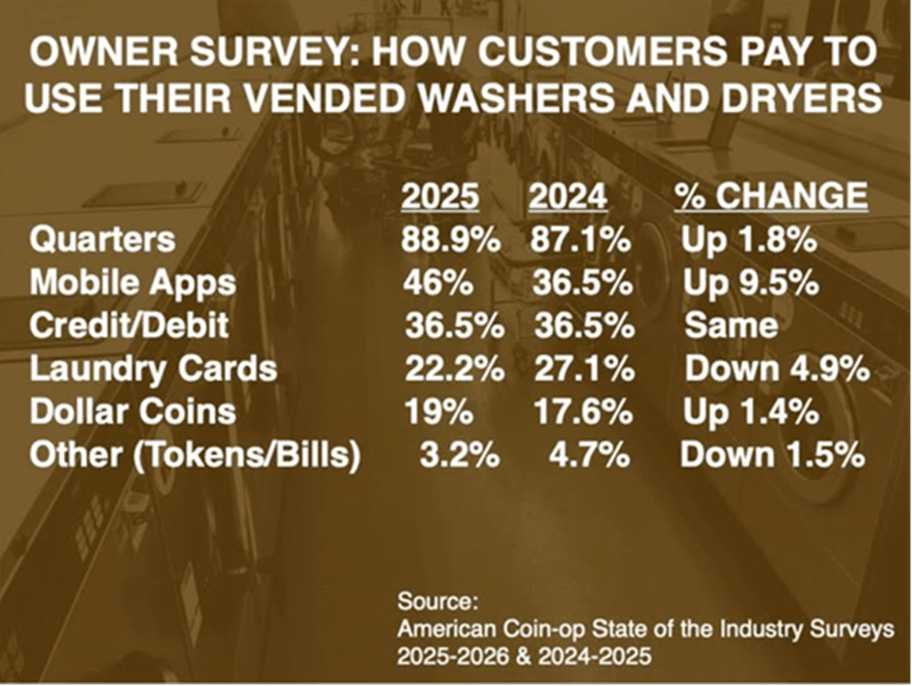
“Quarters: 88.9% usage in 2025 (up from 87.1%), Mobile apps: 46% (growing fast), Credit/Debit: flat at 36.5%, Laundry cards: declining to 22.2%”
He turned the phone around and smiled, “Coins didn’t go away,” he said. “They got stronger.”
The Convenience Question
“But customers want convenience, right?” the new owner asked.
The experienced laundry pro nodded, “Absolutely. The question is—whose convenience?”
That’s when the conversation shifted.
“Laundry card systems,” he said, “are often designed for operational convenience. The decision is based on what’s easier for the owner—not the customers’ convenience.”
The owner leaned in.
“Think about the experience. Did you ever stop to consider the process?” the laundry pro continued.
A new customer walks in with cash and now has to:
- Purchase a proprietary card that has no value elsewhere
- Load money onto it to work any machine in the mat
- Keep track of that card
- Leave with a $3.75 unused balance on that card
“Meanwhile,” he added, “the owner gets this mysterious float, some usage data, and a better paper trail of revenue.”
Access Still Matters
The experienced owner glanced around the store.
“A lot of this industry still serves the underbanked and unbanked. As a matter of fact, some of the most profitable commercial laundries are in these neighborhoods.”
“Coins don’t require:
- A bank account
- A smartphone
- Personal data
- Or a learning curve”
“They just work,” the older owner expanded. “And when you remove that option, you’re not modernizing—you’re excluding.”
The Quarter Conversation
The younger owner laughed, “Yeah, but collecting quarters is a pain.”
The distributor smiled, “So is running a business. Or haven’t you noticed yet?”
Then he added:
“Every system has tradeoffs:
- Coins jam
- Readers fail
- Networks drop
- Apps glitch
But coins don’t rely on WiFi, servers, or third-party processors.”
The older gentleman continued, “They just keep working. Some owners tell me that their real business is selling quarters to their customers, because they give the quarters back when they use their machines. That’s a clever way of looking at it.”
Hybrid Isn’t a Trend—It’s a Strategy
“So what’s the move?” the young owner asked.
“Hybrid,” the experienced owner replied.
“Give customers options. Coins for accessibility and reliability—Digital for flexibility and growth. But don’t confuse expansion with replacement,” he added, “You’re not replacing coins. You’re building around them. You’re using the profitability of your coin revenue to help offset the operating costs associated with your digital revenue.”
Final Thought
As the conversation wrapped up, the experienced owner left the young owner with this:
“This business isn’t about chasing technology. It’s about removing friction.”
“Technology is powerful—when it works.”
“Digital payments serve a growing segment of customers. But many still don’t want another card, another app, or another system holding their money or data. And speaking of all that backend data? If you don’t know how to use it… does it really have value?”
At the end of the day, most customers want something simple: a clean store, working equipment, a safe, well-lit environment, and plenty of folding surfaces.”
“Start there. Build from there. Because in this business, success doesn’t come from the newest system— It comes from understanding the customers that walk in regularly, and they turn around and tell their friends and neighbors.”
It was an interesting take. I was glad I got to hear this informative conversation.